Matilda Lafferty
Under the Banner of HeavenMatilda Lafferty was Dan Lafferty’s first wife, and her experience shows how a religious text and claims of male authority became rules governing a family’s daily life. As Dan embraced the teachings of The Peace Maker, Matilda lost control over ordinary decisions and faced the prospect of being separated from her children. She described a marriage that began with hope and deteriorated into a situation she experienced as hellish.
Identity and Family
The household Dan reshaped included Matilda, two daughters she had from a previous marriage, and four children she and Dan had together. Their family grew again in July 1983, when Matilda gave birth at home to their fifth child, a son. The evidence places her within a family structure in which Dan treated paternal authority as extending over his wife and children, not merely over his own choices.
Matilda’s position in that household was also affected by Dan’s interest in plural marriage. He first announced that he intended to take her oldest daughter as a plural wife. That plan placed Matilda in an especially difficult position: the proposed new wife was her daughter from an earlier marriage, while the decision was presented as part of Dan’s religiously authorized household order. He eventually abandoned that plan and married Ann Randak instead.
The Rules Dan Imposed
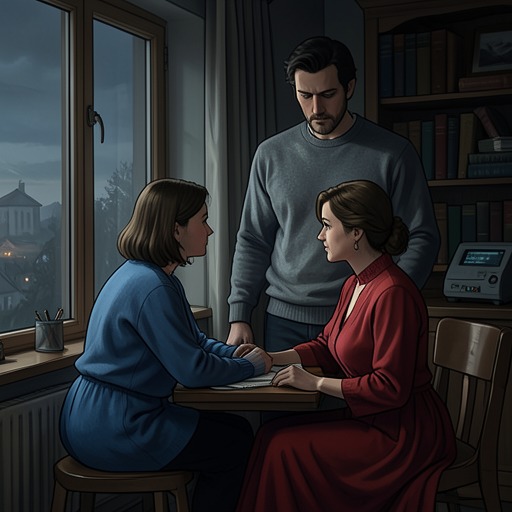
Dan’s turn toward The Peace Maker gave his new domestic rules a religious rationale. Once he decided to live according to the book’s strictures, Matilda was forbidden to drive, handle money, or speak with people outside the family when he was absent. He required her to wear a dress at all times. The children were taken out of school and were no longer allowed to play with their friends. These were not isolated restrictions: together, they narrowed the family’s contact with the outside world and placed everyday decisions under Dan’s control.
Dan also barred the family from seeking outside medical care. He treated illness through prayer, fasting, and herbal remedies, and when their fifth child was born, he delivered the baby himself and circumcised the boy. The family’s practical independence was reduced in other ways as well. They grew much of their own food and collected discarded bread and produce from grocery-store Dumpsters. Dan shut off the gas and electricity, banned publications other than LDS books and magazines, and removed the household’s watches and clocks because he believed the family should keep time by spiritual means.
The restrictions reached into Matilda’s relationship with Dan. When she disobeyed him, he punished her physically; she later characterized the blows as thumps. The punishment could take place in front of his mother, his brothers, and the children. Dan warned that continued disobedience could result in her being put out of the marriage without the children. The principle he invoked was that the children belonged to the father. In practice, that threat made the prospect of leaving inseparable from the possibility of losing them.
Staying and the Marriage’s Deterioration
Matilda later described her choice as having no real alternative: she could leave and lose her children, or remain and accept Dan’s demands. She stayed. Her account does not portray the marriage as unhappy from its beginning. She recalled its first years as extremely happy and hopeful, making the subsequent deterioration a defining change rather than a continuation of an already failed relationship. By the time she testified about it, she said the marriage had disintegrated and that she dreamed of Dan dying so she could get out.
Her testimony places the pressure on her in concrete terms: the threat was not simply the end of a marriage but separation from the children she was trying to keep with her. Dan’s authority was reinforced by the religious argument that he was entitled to determine the family’s arrangements. His proposal to marry her oldest daughter, his control over her movements and access to others, and his warning that she could be expelled without the children all belonged to the same household order. Matilda’s decision to stay therefore records both her continued presence in the marriage and the constrained conditions under which that presence was maintained.
Dan’s Other Marriage and Their Last Recorded Visit
After announcing his intention to marry Matilda’s oldest daughter, Dan changed course. He married Ann Randak, a Romanian immigrant who cared for horses on a ranch in Spanish Fork Canyon. Dan said that he had met Ann after borrowing a horse from her for a local parade, and described the plural marriage as her idea. This change did not erase the earlier proposal or the pressure it had placed on Matilda; it marked the path Dan took instead.
On July 23, Dan visited Matilda and their children in Orem. It was the first birthday of their youngest child, the son born the previous July. He had scarcely seen the boy in the months since the birth. The visit was brief: Dan said goodbye that afternoon and went to his mother’s home in Provo to meet Ron Lafferty. He did not know that this would be the last time he saw Matilda and the children. The account gives no further outcome for Matilda here, but the farewell closes the available record of her direct contact with Dan at a moment when their family life had already been transformed by his rules and plural marriage.
Narrative Significance
Matilda’s account makes the consequences of religious authority visible at the scale of a household. Dan’s reading of The Peace Maker translated into control of movement, money, education, health care, communication, and family relationships. The threat that she might lose her children gave those rules their sharpest personal consequence. Her testimony also supplies a clear before and after: an initially happy marriage became, in her description, a situation from which she longed to escape, while the children’s status as the father’s property made leaving feel impossible. Her story is therefore not only about Dan’s religious commitments, but about how those commitments reorganized the choices available to the people living under his authority.